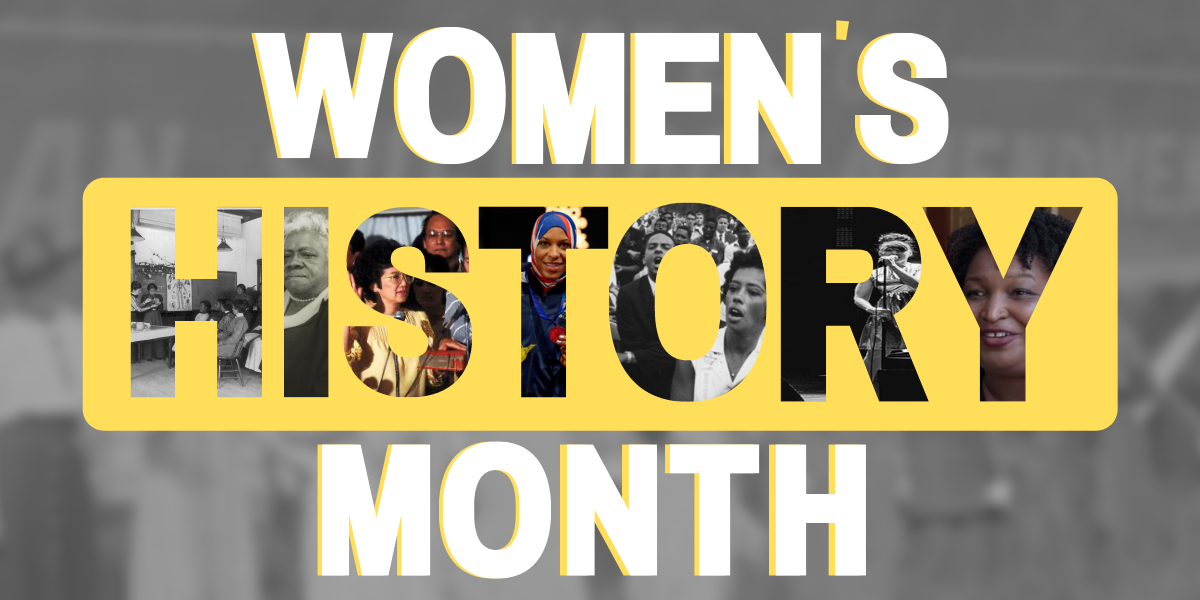
March is recognized as National Women’s Month in the United States and other countries. National Women’s Month is a month dedicated to honoring and acknowledging the achievements, contributions and important roles that women have been involved in throughout history and society.
This celebration started locally in Santa Rosa, California. They first began with planning and executing “Women’s History Week” in 1978 by the Education Task Force of Sonoma County Commission. They chose March 8th to mark as the special week to acknowledge women’s accomplishments. Organizers later selected March 8th to become International Women’s Day, and the movement began to spread quickly across the country, where more communities started to celebrate Women’s History Week as well.
“My mom is the most inspirational woman to me,” Zoey Krenn, sophomore, said. “She takes care of my two other siblings and me, and she’s a teacher. I have a lot of respect for her because she teaches all day and comes home with a peaceful mind.”
The National Women’s History Project, later changed to National Women’s History Alliance, joined with Women’s groups and historians in 1980 to successfully lobby for the celebration to be nationally recognized. In 1987, Congress passed resolutions that requested the president to proclaim March of every year as Women’s History Month.
The National Women’s History Alliance has a theme it works toward each year. In 2026, the theme is “Shaping a Sustainable Future.” The theme honors all the women who have and continue to rebuild structures to improve long-term stability. Women have been powerful leaders in creating a future that’s grounded in equality and promotes opportunity for everyone. This theme consists of financial stability, creating strong community resilience, building leadership succession, and integrating equality all around. A sustainable future doesn’t just stop at environmental issues; it covers all flaws that may damage a stable future.